
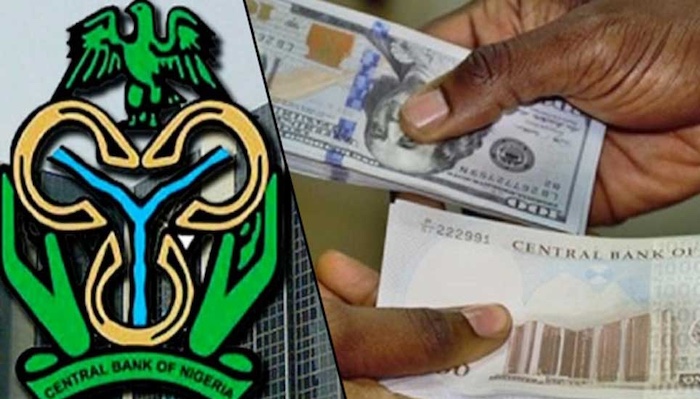

Nigeria’s naira exchange rate surged to N1,348 per US dollar at the Nigerian Foreign Exchange Market (NFEM) on Wednesday, marking its strongest level in 14 months since the official FX window was introduced in December 2024.
Data published by the Central Bank of Nigeria (CBN) showed the local currency closed at N1,348.95/$, the first time it has traded stronger than the N1,350 threshold under the new regime. On Tuesday, the naira stood at N1,351/$.
Year-on-year, the currency has appreciated by N165, or 10.9 percent, underscoring sustained recovery driven by policy interventions and improved liquidity conditions.
Naira Exchange Rate Gains After CBN Approves BDC Return
The latest rally in the naira exchange rate followed the CBN’s decision to permit licensed Bureau De Change (BDC) operators to resume participation in the NFEM.
Under the new directive:
- Each BDC can purchase up to $150,000 weekly
- Transactions must comply with existing operational guidelines
- Purchases must occur through any Authorised Dealer Bank (ADB)
- Rates will reflect prevailing market prices
The apex bank said the move aims to enhance foreign exchange liquidity in the retail segment and meet legitimate end-user demand.
The policy was conveyed in a circular signed by CBN Director of Trade and Exchange, Dr. Musa Nakorji.
Strict Compliance Rules to Protect Market Integrity
While reopening access, the CBN imposed stringent regulatory conditions to safeguard the financial system.
Authorised dealers must conduct full Know-Your-Customer (KYC) checks and due diligence before FX sales. Licensed BDCs are required to submit accurate electronic returns in line with extant regulations.
Additionally:
- Unutilised FX must be resold within 24 hours
- BDCs cannot hold FX positions from NFEM purchases
- Third-party transactions are prohibited
- Cash settlements are capped at 25 percent per transaction
These measures reflect the CBN’s strategy to balance liquidity expansion with tight oversight.
Previously, the apex bank had suspended weekly dollar allocations to BDCs over allegations of illicit transactions and money laundering. Earlier interventions ranged between $10,000 and $20,000 per operator.
Parallel Market Reacts as Liquidity Improves
The strengthening naira exchange rate also influenced the parallel market, where the currency appreciated by N10 to trade at N1,440 per dollar, compared to N1,450 the previous day.
Improved liquidity and regulatory clarity contributed to narrowing spreads between official and informal markets, reinforcing market confidence, investor sentiment, macroeconomic stability, forex supply, capital inflows, regulatory discipline, monetary reforms, trade balance, economic resilience, fiscal coordination, inflation management, financial transparency, risk controls, banking compliance, external reserves, currency stability, policy credibility.
Capital Importation Surges to $21 Billion
Meanwhile, Minister of Industry, Trade and Investment, Dr. Jumoke Oduwole, disclosed that Nigeria recorded approximately $21 billion in capital importation in the first 10 months of 2025.
Speaking during the ministry’s 2026 budget defence before the Joint House of Representatives Committee on Commerce, she noted the figure represents a sharp rise from about $12 billion in 2024 and less than $4 billion in 2023.
Oduwole attributed the rebound to:
- Over $5 billion in curated bankable projects
- Sector-specific deal rooms
- Nigeria’s inaugural Domestic Investors’ Summit
Nigeria also recorded a trade surplus in 2025, with total trade valued at about N113 trillion in the first three quarters. Exports rose 11 percent year-on-year to $6.1 billion — the highest ever in value and volume.
Special Economic Zones contributed more than $500 million in export revenues and generated over 20,000 direct jobs.
Budget Appeal and Revenue Performance
The minister, however, called for an upward review of the proposed N2.72 billion capital allocation for 2026, warning it may be insufficient to sustain programme execution.
In 2024, the ministry had a total appropriation of N14.39 billion, with 93.2 percent of its N8.36 billion capital allocation fully released and utilised. Revenue performance exceeded its target by approximately N154 million, with full remittance to the Consolidated Revenue Fund.
Outlook for the Naira Exchange Rate
The renewed strength of the naira exchange rate signals growing confidence in Nigeria’s foreign exchange reforms. With improved liquidity, disciplined oversight, and rising capital inflows, policymakers aim to stabilise the market while preserving financial integrity.
If current reforms remain consistent, the naira exchange rate could sustain its recovery trajectory, reinforcing broader macroeconomic stability and investor confidence in Africa’s largest economy.