
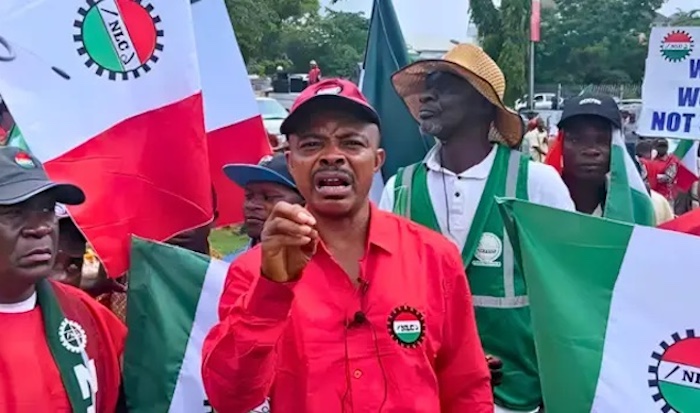

The Nigeria Labour Congress (NLC) has emphasized the need for greater access to labour justice in Nigeria, warning that persistent unfair labour practices threaten industrial harmony.
The position was articulated by NLC President Joe Ajaero on Thursday at the 4th International Labour Adjudication & Arbitration Forum (I-LAAF), organized by the Nigeria Employers Consultative Association.
Ajaero stressed that the judiciary must be impartial in adjudicating labour disputes, capable of recognising power imbalances between lone workers and large corporations.
Labour Justice Must Be Accessible and Impartial
Highlighting systemic challenges, Ajaero said the judiciary must not merely be “blind” but possess “20/20 vision for justice.”
He warned that courts often legitimise unfair dismissals, criminalize lawful strikes, and uphold contracts that perpetuate modern wage exploitation.
“When justice is commodified and accessible only to those who can afford endless litigation, the judiciary abdicates its duty,” he said.
The NLC president called for courts to respect the collective will of workers and uphold rights enshrined in international labour standards.
Courts Should Defend Workers’ Rights
Ajaero cautioned that when judicial avenues fail, workers historically turn to direct action, mass mobilization, and collective power to defend their rights.
He noted, “The history of every worker’s right—from the eight-hour day to safety standards—is written not primarily in court judgments, but in strikes, protests, and solidarity.”
The forum underscored the importance of judicial understanding of workplace dynamics, urging arbitrators to defend the weak against the strong.
Upholding ILO Conventions and the Right to Strike
Ajaero called on judges and arbitrators to apply conventions such as ILO C87 and ILO C98 faithfully.
He stressed that the right to strike should be recognised as an inalienable human right, not a negotiable privilege.
True industrial peace, Ajaero concluded, can only be achieved through justice, transparency, and protection of workers’ rights—not fear, coercion, or subjugation.
The Path Forward for Labour Justice in Nigeria
The NLC’s call for greater access to labour justice signals a push for systemic reforms, including fair adjudication, recognition of union authority, stronger enforcement of labour laws, protection of collective bargaining, prevention of wage exploitation, equitable dispute resolution, industrial peace, legal accountability, workers’ empowerment, labour rights education, anti-discrimination measures, efficient court processes, accessible arbitration mechanisms, workplace safety enforcement, legislative alignment, judicial impartiality, conflict resolution frameworks, and enhanced employer accountability.
The forum emphasized that genuine justice for workers is foundational to sustainable industrial relations and economic growth in Nigeria.