
Nigeria’s Auditor-General budget 2026 has come under intense scrutiny, with the House of Representatives warning that chronic underfunding of the Office of the Auditor-General for the Federation (OAuGF) could weaken anti-corruption safeguards and erode accountability frameworks.
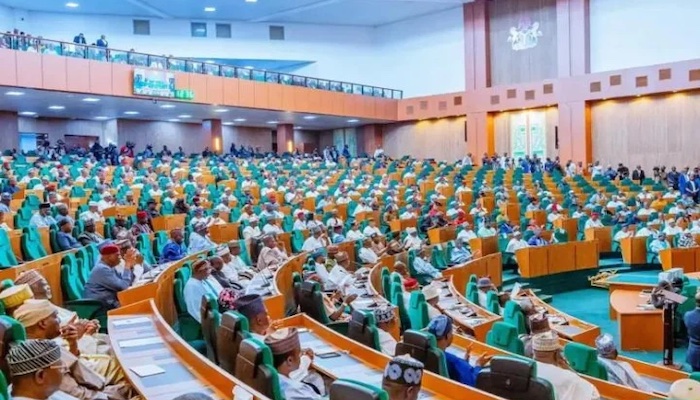
The alarm was raised by the House Committee on Public Accounts during its review of the 2026 budget proposal at the National Assembly.
Lawmakers argued that inadequate financing of the apex audit institution threatens transparency, fiscal discipline, and effective public financial management.
Auditor-General Budget 2026 Allocation Raises Red Flags
Under the proposed Auditor-General budget 2026, the OAuGF is allocated N15.88 billion out of the federal government’s N58.4 trillion total appropriation bill.
The Committee noted that this represents just 0.027 percent of the national budget.
According to Committee Chairman, Hon. Bamidele Salam, it is unrealistic to expect the Auditor-General’s Office to effectively oversee and audit a proposed N58.4 trillion expenditure with such limited resources.
The Office is constitutionally mandated to audit more than 1,000 Ministries, Departments and Agencies (MDAs), alongside other government-funded institutions.
Capital Release Constraints Undermine Audit Effectiveness
Beyond allocation concerns, lawmakers revealed troubling release patterns.
In the 2025 fiscal year, only four percent of the capital budget approved for the Office was released. Salam disclosed that past budget constraints forced the institution to audit only five out of nearly 100 Nigerian foreign missions worldwide.
A breakdown of the Auditor-General budget 2026 shows:
- N5.3 billion for personnel costs
- N5.6 billion for overhead expenses
- N4.8 billion for capital projects
The Committee warned that without adequate and timely funding—particularly capital releases—the Office cannot deploy modern audit technologies, recruit and retain skilled professionals, or significantly enhance operational capacity.
Global Standards Demand Independent Audit Funding
Lawmakers referenced standards set by the International Organisation of Supreme Audit Institutions (INTOSAI), which require supreme audit institutions to receive adequate, secure, and independent funding to function without external interference.
They stressed that true budgetary autonomy is achieved when audit bodies submit estimates directly to the legislature or a designated parliamentary committee, safeguarding independence.
Chronic underfunding, the Committee argued, weakens oversight architecture and compromises governance systems, institutional independence, fiscal transparency, democratic accountability, public trust, budget credibility, expenditure monitoring, compliance enforcement, systemic reforms, operational capacity, financial oversight, legislative scrutiny, revenue assurance, audit modernization, professional training, anti-corruption safeguards, regulatory enforcement, public sector efficiency.
Reps Demand Stronger Support for Auditor-General Budget 2026
Describing weak institutions as a driver of corruption, Salam warned that starving oversight bodies of resources ultimately undermines Nigeria’s anti-corruption efforts.
The Committee has therefore urged the federal government and relevant stakeholders to ensure adequate appropriation and full release of funds under the Auditor-General budget 2026.
Strengthening the financial and operational capacity of the Auditor-General’s Office, lawmakers insist, remains critical to safeguarding public funds and reinforcing national accountability standards.


