
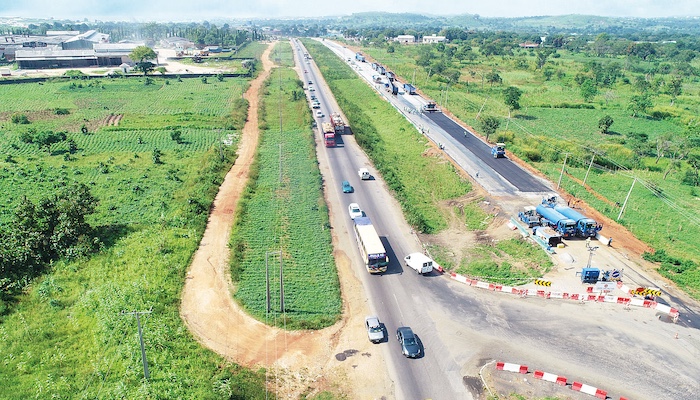
Abuja, Nigeria – May 2025
The Federal Government of Nigeria has assured that the ongoing reconstruction of the Abuja-Kaduna-Kano Road using reinforced rigid pavement technology will ensure the road lasts between 50 to 100 years, marking a significant shift in infrastructure durability standards across the country.
Minister of State for Works, Bello Goronyo, made this known during an inspection tour of the project, where he praised the quality of materials and progress made by Infiouest Nigeria Limited, the construction firm handling the project.
“What we are seeing here is superb. The rigid pavement being used is expected to last up to a century—far exceeding the lifespan of traditional asphalt roads,” Goronyo said, emphasizing the project’s alignment with President Bola Tinubu’s infrastructure development agenda.
According to Goronyo, approximately six kilometers of the road have already been completed using high-strength reinforced concrete, reflecting the government’s commitment to long-lasting, high-quality infrastructure. Once completed, the road is expected to cut travel time, enhance safety, curb insecurity, and boost trade and employment across Northern Nigeria.
Project Manager Robert Turner assured that the contractor is fully committed to delivering a world-class road. “There are no shortcuts. We are giving our very best every single day,” Turner stated, noting the team’s daily work hours from 6:00 a.m. to 9:00 p.m., limited only by regional security concerns.
Permanent Secretary of the Federal Ministry of Works, Olufunsho Adebiyi, also underscored the strategic shift from flexible to rigid pavement. He explained that Nigeria’s soil composition, water table conditions, and axle load challenges have made conventional asphalt unreliable in high-traffic areas.
“This new method, reinforced with Y20 steel bars at 200mm centers, offers durability beyond most bridge decks. It is a sustainable solution that will outlast generations,” Adebiyi said.
He cited failures on roads like the Apapa-Oworonshoki Expressway as a driving factor behind the shift, emphasizing that rigid pavement is now essential for Nigeria’s key transport corridors.
While urging public patience during ongoing construction, Adebiyi assured that phased openings of completed sections will ease disruptions for road users.
The Zuba section, in particular, remains a critical national link, and the federal government reaffirmed its unwavering commitment to delivering the project successfully and on schedule.


