
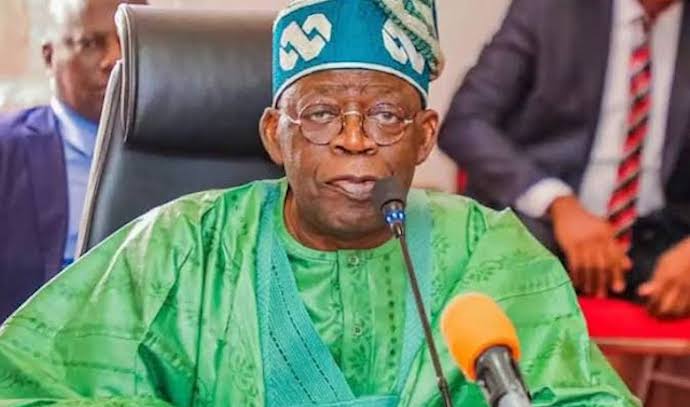

President Bola Tinubu has defended his administration’s decision to remove fuel subsidy, citing the necessity for Nigeria’s future and economic growth. Speaking at the Nigeria International Energy Summit (NIES), Tinubu highlighted the importance of creating a transparent and accountable energy sector, emphasizing the redirection of funds previously allocated to petroleum subsidy towards energy and social infrastructure development.
During the summit, overseen by Brevity Anderson, themed “Navigating the New Energy World Order: Security, Transition, and Finance,” Tinubu stressed Nigeria’s position amidst a rapidly transforming global energy landscape. He underscored energy security as crucial for economic stability and development, emphasizing the resilience of energy infrastructure in the face of emerging challenges.
Addressing concerns about the impact of subsidy removal on Nigerians, especially vulnerable populations, Tinubu assured of his administration’s commitment to implementing social intervention programs to mitigate short-term effects. He urged stakeholders to engage in constructive dialogue and collaboration to navigate transformative times and build a resilient energy future for Nigeria.
Meanwhile, Group Chief Executive Officer of the Nigerian National Petroleum Company Limited (NNPCL), Mele Kyari, reiterated the company’s role as a facilitator in the energy sector, ensuring optimal production for national energy security. Kyari also expressed willingness to invest in the proposed African Energy Bank to guarantee sustainable funding for energy projects in Africa.
Minister of State, Petroleum Resources (Oil), Senator Heineken Lokpobiri, emphasized the need to safeguard Nigeria’s energy infrastructure and promote a resilient oil and gas sector. He highlighted the importance of attracting competent players with technical and financial capabilities to drive economic prosperity through energy investments.
In light of global declines in oil and gas investments, Lokpobiri called for urgent action to address Nigeria’s declining capital investment-to-reserve ratio and leverage indigenous oil firms’ capacity to optimize assets. He advocated for increased production to alleviate foreign exchange challenges and stressed the importance of realizing the Africa Energy Bank to facilitate energy sector growth.
Minister of State for Petroleum Resources (Gas), Ekperikpe Ekpo, emphasized Nigeria’s abundant gas reserves and its crucial role in enhancing energy security. Ekpo highlighted gas as a transition fuel aligning with global climate objectives and urged Nigeria to leverage its gas advantage for industrialization and regional energy leadership.
As discussions continued, Secretary General of the Organisation of Petroleum Exporting Countries (OPEC), Haitham Al Ghais, commended Nigeria’s past and present contributions to OPEC and anticipated a bright future for Africa’s oil industry. Chairman of the Independent Petroleum Producers Group (IPPG), AbdulRazaq Isa, raised concerns about the slow pace of asset handover from IOCs to Nigerian buyers.
Secretary General of the African Petroleum Producers’ Organisation (APPO), Farouk Ibrahim, emphasized Africa’s need to define its energy pathway, asserting the continent’s right to leverage fossil fuels while advocating for global responsibility in addressing climate change.