
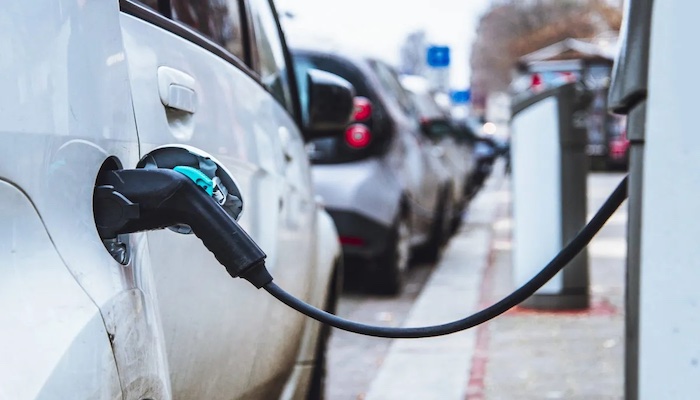
As petrol costs surge across Nigeria, electric vehicles are emerging as a cost-effective alternative for individuals and businesses. Industry leaders and policymakers say lower operating expenses and innovative financing models are accelerating adoption.
Nigeria’s growing fuel cost crisis is pushing more consumers and transport operators toward electric vehicles (EVs), according to stakeholders at a recent electric mobility forum in Abuja. Experts say the transition, once considered long-term, is now being driven by immediate economic pressures.
Fuel Costs Driving EV Adoption
At the Abuja Compact on Electric Mobility Roundtable, participants—including government officials, financiers, and clean energy experts—agreed that rising petrol prices are reshaping transportation choices.
They noted that as fuel and transport expenses consume a larger share of household and business income, EVs are increasingly viewed as a practical and cost-saving solution rather than a futuristic concept.
Omolara Obileye, representing the Presidential Initiative on Compressed Natural Gas and Electric Vehicles (Pi-CNG & EV), highlighted the growing financial advantage of EVs following the removal of fuel subsidies.
“Charging an electric vehicle for a 200-kilometre journey costs about N4,500, compared to roughly N22,500 for petrol. That’s a five-to-one cost advantage,” she said.
Government Push for Gradual Energy Transition
Obileye explained that Nigeria’s strategy is not to replace one energy source with another abruptly, but to pursue a phased transition.
According to her, the government is working toward a balanced energy mix that combines compressed natural gas (CNG) and electric mobility, while building the infrastructure required for long-term sustainability.
However, she acknowledged ongoing challenges, including unreliable electricity supply, limited charging infrastructure, and affordability barriers.
Infrastructure and Innovation Take Center Stage
Industry players say solving Nigeria’s power challenges is key to scaling EV adoption. Yusuf Suleiman, CEO of Bankrol Camel EV and Blue Camel Energy Ltd, emphasized the broader economic potential of electric mobility.
He described EV adoption as a pathway to improved energy access, industrial growth, and reduced dependence on imported fossil fuels.
Suleiman added that his company is developing solar-powered charging stations and service hubs designed to operate independently of the national grid.
“A fully solar-powered charging system is not just feasible—it can be a sustainable business model,” he said.
Cost Savings Driving Commercial Adoption
For transport operators, the shift to EVs is increasingly driven by profitability. Ahmed Garba Ahmed, Chief Operating Officer of Bankrol Camel EV, said electric vehicles can reduce energy costs per kilometre by as much as 60 percent.
He noted that for ride-hailing drivers, logistics firms, and fleet operators, the decision is less about environmental impact and more about financial survival.
“This is about margins and long-term sustainability. The transition is already underway,” he said.
Financing Models Expanding Access
Access to financing is also playing a critical role in accelerating EV adoption. Mohammed Abdul, Divisional Head at Alternative Bank, said tailored financial products are helping overcome barriers faced by Nigeria’s largely informal transport sector.
He pointed to models such as lease-to-own agreements, partnerships, and pay-as-you-go systems, which allow drivers to acquire EVs without large upfront payments.
According to Abdul, these approaches align with broader goals of financial inclusion and economic empowerment.
Beyond Mobility: Impact on Energy Sector
Experts also highlighted the potential for EV infrastructure to support improvements in Nigeria’s energy distribution. Engr. Dapo Adesina, President of the Electric Mobility Promoters Association of Nigeria (EMPAN), said solar-powered charging networks could be deployed nationwide.
He added that EV infrastructure could contribute not only to transportation efficiency but also to better energy utilization across the country.
Outlook: Momentum Builds for Electric Mobility
Stakeholders at the roundtable agreed that Nigeria’s transition to electric mobility is no longer hypothetical. Instead, it is gaining traction as economic realities push consumers and businesses to seek more sustainable alternatives.
While challenges remain, particularly in infrastructure and power supply, the combination of cost savings, policy direction, and financing innovation is expected to drive continued growth in the EV sector.


