
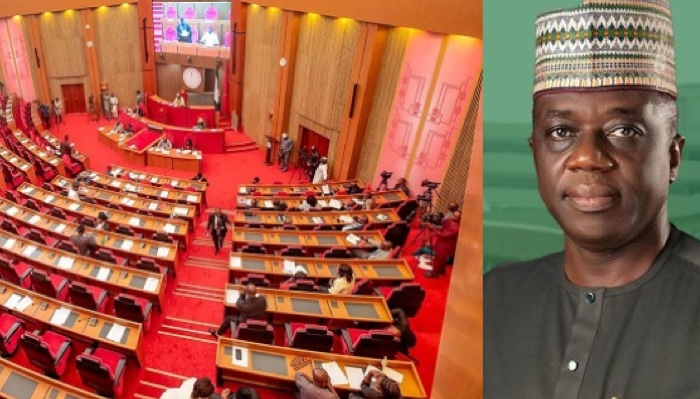
The Senate on Thursday launched a scathing attack on the Dr. Shamsedeen Ogunjimi over zero capital allocations to several Ministries, Departments, and Agencies (MDAs) in the 2025 budget, as well as mounting complaints from unpaid contractors nationwide.
At an explosive session of the Senate Committee on Finance, lawmakers accused the Office of the Accountant-General of frustrating budget implementation, presiding over a controversial Centralised Payment System (CPS), and failing to account for N28 trillion reportedly generated by revenue agencies.
Senate Committee Condemns Budget Implementation Failures
Committee Chairman Senator Sani Musa opened the session by describing the AGF’s engagement with the legislature as “unfriendly,” warning that the budget proposal would not be approved until the office demonstrated commitment to effective fiscal management.
Musa specifically criticized the federal government’s envelope budgeting system, describing it as ineffective and calling for adoption of a performance-based framework to improve budget delivery.
Senator Danjuma Goje amplified the criticism, describing budget implementation since 2024 as “embarrassing” and raising concerns over unpaid contractors despite the removal of fuel subsidies and harmonization of the foreign exchange market.
Senator Muntari Dandutse further demanded clarity on the N28 trillion revenue figure, questioning why 85 percent of contractors remain unpaid and most MDAs received zero capital allocations.
Centralised Payment System Under Fire
The AGF’s Centralised Payment System drew sharp criticism from lawmakers who described it as compromised and contributing to payment delays. Other senators, including Abdul Ningi (Bauchi Central), Asuquo Ekpenyong (Cross River South), Adams Oshiomhole (Edo North), Aminu Abbas (Adamawa Central), and Patrick Ndubueze (Imo North), urged Ogunjimi to advise President Bola Tinubu on potential internal sabotage undermining fiscal operations.
The combination of unpaid contracts, stalled capital projects, and zero allocations to MDAs painted a troubling picture of Nigeria’s 2025 budget, lawmakers insisted.
AGF Defends Office Amid Storm of Criticism
In response, Ogunjimi attributed the backlog of unpaid obligations to indiscriminate contract awards by MDAs without secured funding.
“Yes, as the Accountant-General of the Federation, my office is expected to disburse funds to relevant agencies at the appropriate time, but that can only be done if the funds are available,” he said.
He also acknowledged operational challenges with the CPS but insisted corrective steps were underway for seamless operation. Ogunjimi highlighted that the controversial “Ways and Means” financing previously used to plug budget gaps had been discontinued to protect the economy.
Despite his explanations, senators remained unconvinced, demanding tangible results over technical justifications.
Closed-Door Session Signals High-Stakes Scrutiny
With key questions unresolved—particularly regarding the N28 trillion revenue figure and zero capital allocations—the committee moved into a closed-door session with the AGF for “further critical engagement.”
The outcome of that session is expected to determine the fate of the Accountant-General’s budget proposal and could influence broader debates on fiscal transparency, budget performance, accountability, public expenditure, financial integrity, contractor payments, capital project delivery, government efficiency, performance-based budgeting, revenue management, institutional credibility, public sector reform, financial oversight, policy enforcement, governance standards, budget monitoring, expenditure tracking, and national economic stability.
The session underscores the Senate’s insistence on accountability and the urgent need for tangible improvements in Nigeria’s budget implementation framework.


