
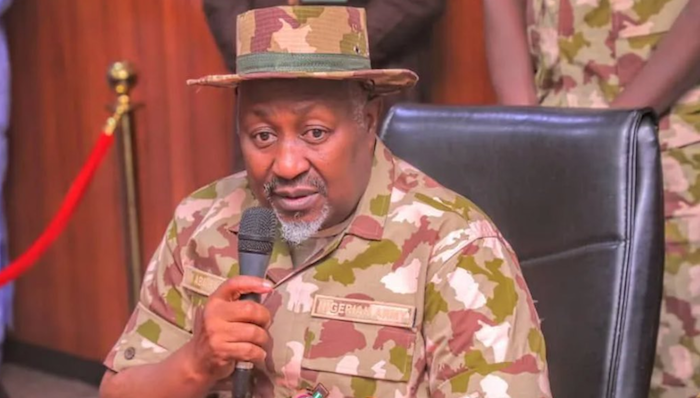

In a move that has raised questions amid Nigeria’s ongoing security challenges, the country’s Defence Minister, Badaru Abubakar, resigned on Monday night, citing health reasons. The resignation comes as the nation grapples with rising insecurity, and speculation is growing that former Chief of Defence Staff (CDS) Gen. Christopher Musa could be his successor.
Abubakar, who was appointed to the role of Defence Minister on August 21, 2023, under President Bola Tinubu, formally submitted his resignation in a letter dated December 1, 2023. The Special Adviser to the President on Information and Strategy, Bayo Onanuga, confirmed the resignation, acknowledging that it was due to health concerns.
In his resignation letter, Abubakar, 63, who previously served as Governor of Jigawa State from 2015 to 2023, expressed his desire to step down for health reasons. President Tinubu accepted the resignation with gratitude, commending Abubakar for his services to the country. Onanuga also revealed that the president is expected to propose a new Defence Minister to the Senate in the coming days.
The resignation comes at a critical time, as Nigeria continues to struggle with a series of security challenges. These issues have been exacerbated by insurgency in the northeast and other regions. Just recently, President Tinubu declared a national security emergency, signaling an urgent need for reform and stronger leadership within the country’s military and security sectors.
While no official announcement has been made, sources suggest that Gen. Christopher Musa, who was relieved of his duties as Chief of Defence Staff during a military reshuffle in October 2025, could step into the role. Musa, who served as CDS from June 23, 2023, was credited with spearheading important military restructuring and modernisation efforts. His tenure as theatre commander of Operation Hadin Kai in the northeast earned him praise for his strategic approach to combating insurgency and his emphasis on civil-military cooperation.
As Nigeria faces growing national security challenges, it remains to be seen whether the anticipated leadership changes will bring the much-needed reforms to stabilize the country’s military operations.